
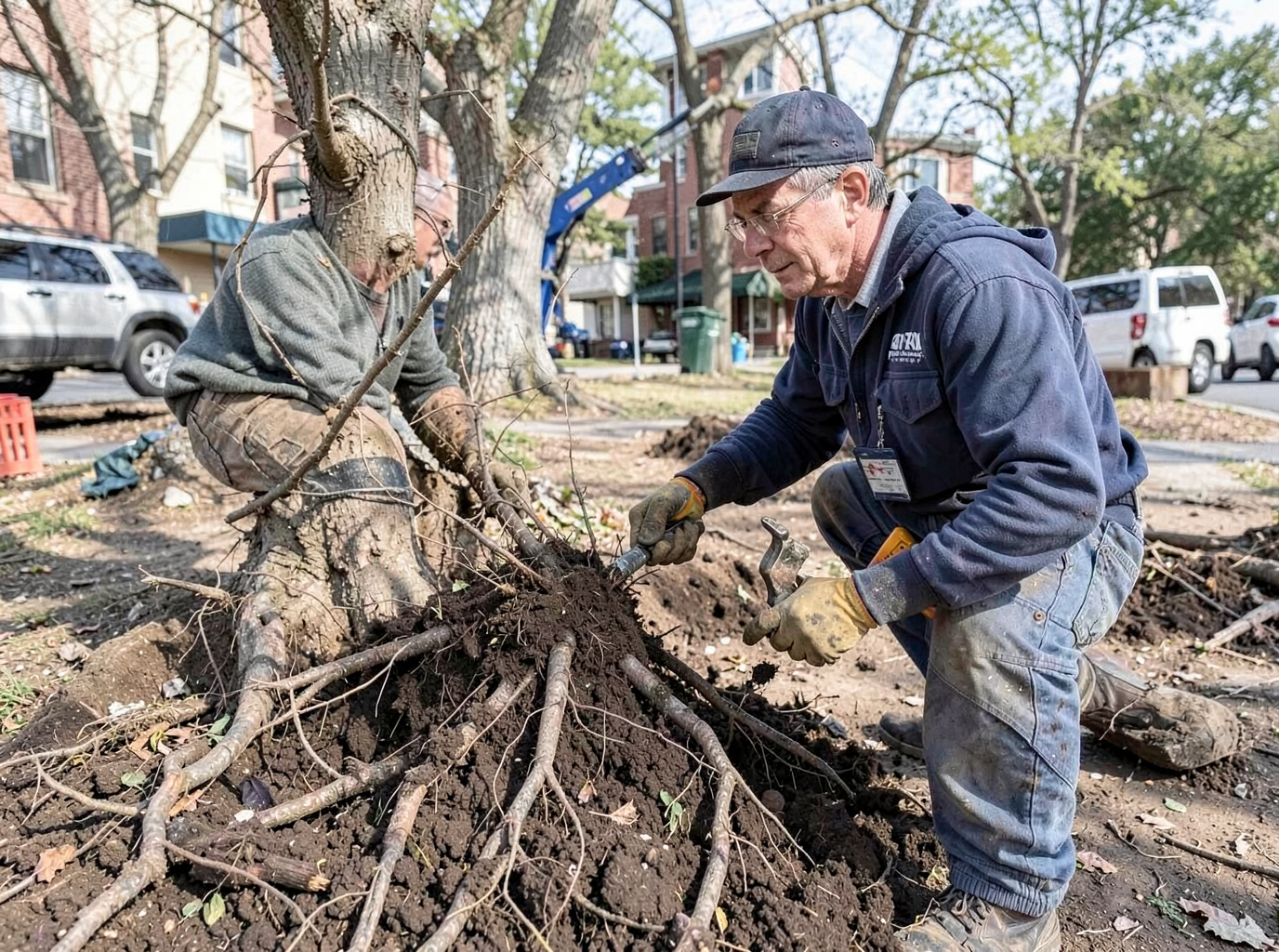
Dearborn's post-war housing stock in West Dearborn and Fordson often features clay or cast-iron laterals laid decades ago near large maples and oaks. Cold snowy winters cause repeated freeze-thaw cycles that crack joints and allow roots to enter, especially on streets near the Arab American National Museum where mature landscaping sits close to foundations. A camera inspection first maps the intrusion before any cutting begins, because mechanical blades can miss secondary roots that re-enter within a season.
Hydro jetting follows root cutting on most jobs in East Dearborn because the dense clay soils around Taylor and Detroit borders hold moisture that encourages regrowth. Operators must watch line depth and slope carefully; many homes sit on slight grades that let debris collect behind removed roots. Without proper flushing, homeowners see backups again after the first warm spell of summer.
Access through existing cleanouts saves yards in Greenfield Village-adjacent blocks where excavation risks disturbing established trees. When roots have penetrated multiple joints, a sectional repair or pipe bursting may be required rather than repeated cutting. Local crews note that lines running under driveways or near The Henry Ford property often need longer cable runs and extra flushing time due to added sediment from winter road treatments.
Technician insight
In Dearborn, the thing that catches most people out with tree root removal is how the freeze-thaw cycles in our humid continental winters shift the clay soil around older cast-iron lines in Fordson and West Dearborn, letting roots re-enter joints that looked clear the previous fall.
Fordson Home With Recurring Backups
A homeowner in Fordson reported slow drains after the first spring thaw. Camera work showed maple roots entering a cracked clay lateral near the Henry Ford Museum area. Mechanical cutting cleared the main mass, followed by hydro jetting and a root barrier on the street side. Flow returned to normal with no excavation required.
Tree Root Removal Services We Offer
✓Sewer Camera Inspection for Root Intrusion
Locates exact root entry points and line condition before cutting begins in Dearborn clay soils.
✓Mechanical Root Cutting
Removes main root masses from sewer lines using powered blades sized for older Wayne County pipes.
✓Hydro Jetting Root Removal
High-pressure water clears remaining root fibers and flushes debris from lines after initial cutting.
✓Root Barrier Installation
Places physical barriers between trees and sewer lines to slow future intrusion in East Dearborn yards.
✓Post Winter Root Clearing
Addresses lines damaged by freeze-thaw cycles common after Dearborn's snowy winters.
Tree Root Removal Cost in MI
| Service | Typical Range | What Affects It |
|---|---|---|
| Camera Inspection With Root Assessment | $150–$250 | Required first step; price rises with multiple cleanouts or difficult access. |
| Mechanical Root Cutting | $300–$600 | Depends on footage cleared and pipe diameter in Wayne County homes. |
| Hydro Jetting Add-On | $200–$400 | Often follows cutting in clay-heavy East Dearborn soils. |
| Root Barrier Placement | $450–$850 | Varies by trench length and tree size near the line. |
Ranges are typical for MI and confirmed with an exact written quote before any work starts.
How it works
- 1
Site Assessment
Technician reviews cleanout locations and tree proximity on the property in West Dearborn or Fordson.
- 2
Camera Inspection
Line is scoped to confirm root locations and pipe material before any cutting equipment enters.
- 3
Root Removal
Mechanical cutting or hydro jetting clears the blockage while protecting surrounding soil and landscaping.
- 4
Final Flush And Check
Line is flushed and re-inspected to verify flow and note any remaining weak joints.
Pricing
Upfront quotes after camera inspection; price varies with line depth, root density, and access in older Dearborn homes.